|
The Life of Prophet Muhammad (PBUH) PART
I |
|||||||||||
The Prophet’s Birth
Muhammad, son of Abdullah, son of Abdul Muttalib, of the tribe of Quraysh, was born in Makkah fifty-three years before the Hijrah. His father died before he was born, and he was protected first by his grandfather, Abdul Muttalib, and after his grandfather’s death, by his uncle Abu Talib. As a young boy he traveled with his uncle in the merchants ’ caravan to Syria, and some years afterwards made the same journey in the service of a wealthy widow named Khadijah. So faithfully did he transact the widow’s business, and so excellent was the report of his behavior, which she received from her old servant who had accompanied him, that she soon afterwards married her young agent; and the marriage proved a very happy one, though she was fifteen years older than he was. Throughout the twenty-six years of their life together he remained devoted to her; and after her death, when he took other wives he always mentioned her with the greatest love and reverence. This marriage gave him rank among the notables of Makkah, while his conduct earned for him the surname Al-Amin, the “trustworthy.” The Hunafa The
Makkans claimed descent from Abraham through Isma`il and tradition
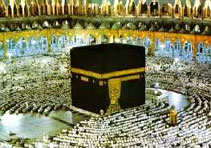
stated that their temple, the Ka`bah, had been built by Abraham for
the worship of the One God. It was still called the House of Allah,
but the chief objects of worship here were a number of idols, which
were called “daughters” of Allah and intercessors. The few who
felt disgust at this idolatry, which had prevailed for centuries,
longed for the religion of Abraham and tried to find out what had been
its teaching. Such seekers of the truth were known as Hunafa (sing.
Hanif), a word originally meaning “those who turn away” (from the
existing idol-worship), but coming in the end to have the sense of
“upright” or “by nature upright,” because such persons held
the way of truth to be right conduct. These Hunafa did not form a
community. They were the non-conformists of their day, each seeking
truth by the light of his inner consciousness. Muhammad son of
Abdullah became one of these. The First Revelation It was
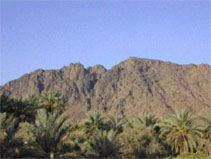
his practice to retire often to a cave in the desert for meditation.
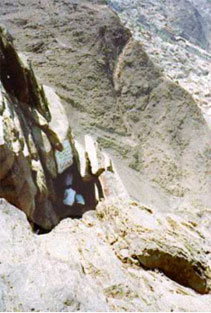
His place of retreat was Hira’, a cave in a mountain called the He heard
a voice say: “Read!” He said: “I cannot read.” The voice again
said: “Read!” He said: “I cannot read.” A third time the
voice, more terrible, commanded: “Read!” He said: “What can I
read?” The voice said:
“Read: In the name of thy Lord Who createth. The Vision of Cave Hira’
He went
out of the cave on to the hillside and heard the same awe-inspiring
voice say: “O Muhammad! Thou art Allah’s messenger, and I am
Jibril (Gabriel).” Then he raised his eyes and saw the angel, in the
likeness of a man, standing in the sky above the horizon. And again
the dreadful voice said: “O Muhammad! Thou art Allah’s messenger,
and I am Jibril (Gabriel).” Muhammad (peace and blessings be upon
him) stood quite still, turning away his face from the brightness of
the vision, but wherever he turned his face, there stood the angel
confronting him. He remained thus a long while till at length the
angel vanished, when he returned in great distress of mind to his wife
Khadijah. She did her best to reassure him, saying that his conduct
had been such that Allah would not let a harmful spirit come to him
and that it was her hope that he was to become the Prophet of his
people. On their return to Makkah she took him to her cousin Waraqa
ibn Nawfal, a very old man, “who knew the Scriptures of the Jews and
Christians,” who declared his belief that the heavenly messenger who
came to Moses of old had come to Muhammad, and that he was chosen as
the Prophet of his people.
His
Distress Recognition
of the Divine nature of the call he had received involved a change in
his whole mental outlook sufficiently disturbing to a sensitive and
honest mind, and also the forsaking of his quiet, honored way of life.
The early biographers tell how his wife Khadijah “tested the
spirit” which came to him and proved it to be good, and how, with
the continuance of the revelations and the conviction that they
brought, he at length accepted the tremendous task imposed on him,
becoming filled with enthusiasm of obedience which justifies his
proudest title of “the Slave of Allah.” For the
first three years, or rather less, of his mission, the Prophet
preached to his family and his intimate friends, while the people of
Makkah as a whole regarded him as one who had become a little mad. The
first of all his converts was his wife Khadijah, the second his first
cousin Ali, whom he had adopted, the third his servant Zayd, a former
slave. His old friend Abu Bakr also was among those early converts. Beginning of Persecution At the
end of the third year the Prophet received the command to “arise and
warn,” whereupon he began to preach in public, pointing out the
wretched folly of idolatry in face of the tremendous laws of day and
night, of life and death, of growth and decay, which manifest the
power of Allah and attest His sovereignty. It was then, when he began
to speak against their gods, that Quraysh became actively hostile,
persecuting his poorer disciples, mocking and insulting him. The one
consideration which prevented them from killing him was fear of the
blood-vengeance of the clan to which his family belonged. Strong in
his inspiration, the Prophet went on warning, pleading, threatening,
while Quraysh did all they could to ridicule his teaching, and deject
his followers. The Flight
to
The
converts of the first four years were mostly humble folk unable to
defend themselves against oppression. So cruel was the persecution
they endured that the Prophet advised all who could possibly contrive
to do so to immigrate to a Christian country, Conversion of Omar The
exasperation of the idolaters was increased by the conversion of Omar,
one of their stalwarts. They grew more and more embittered, till
things came to such a pass that they decided to ostracize the
Prophet’s whole clan, idolaters who protected him as well as Muslims
who believed in him. Their chief men caused a document to be drawn up
to the effect that none of them or those belonging to them would hold
any intercourse with that clan or sell to them or buy from them. This
they all signed, and it was deposited in the Ka`bah. Then for three
years, the Prophet was shut up with all his kinsfolk in their
stronghold which was situated in one of the gorges which run down to
Makkah. Only at the time of pilgrimage could he go out and preach, or
did any of his kinsfolk dare to go into the city. Destruction of the Document At
length some kinder hearts among Quraysh grew weary of the boycott of
old friends and neighbors. They managed to have the document which had
been placed in the Ka`bah brought out for reconsideration; when it was
found that all the writing had been destroyed by white ants, except
the words Bismik Allahumma (“In thy name, O Allah”). When the
elders saw that marvel the ban was removed, and the Prophet was again
free to go about the city. But meanwhile the opposition to his
preaching had grown rigid. He had little success among the Makkans,
and an attempt which he made to preach in the city of The Men from Yathrib They came from Yathrib, a city more than two hundred miles away, which has since become world-famous as al-Madinah, “the City” par excellence. At Yathrib there were Jewish tribes with learned rabbis, who had often spoken to the pagans of a Prophet soon to come among the Arabs, with whom, when he came, the Jews would destroy the pagans as the tribes of ‘Aad and Thamud had been destroyed of old for their idolatry. When the men from Yathrib saw Muhammad they recognized him as the Prophet whom the Jewish rabbis had described to them. On their return to Yathrib they told what they had seen and heard, with the result that the next season of pilgrimage a deputation came from Yathrib purposely to meet the Prophet.
First Pact of al-‘Aqabah These
swore allegiance to him in the first pact of al-‘Aqabah. They then
returned to Yathrib with a Muslim teacher in their, company and soon
“there was not a house in Yathrib wherein there was not mention of
the messenger of Allah.” Second pact of al-‘Aqabah In the
following year, at the time of pilgrimage, seventy-three Muslims from
Yathrib came to Makkah to vow allegiance to the Prophet and invite him
to their city. At al-‘Aqabah, by night, they swore to defend him as
they would defend their own wives and children. It was then that the
Hijrah, the flight to Yathrib, was decided. Plot to Murder the Prophet Soon the
Muslims who were in a position to do so, began to sell their property
and to leave Makkah unobtrusively. Quraysh had wind of what was going
on. They hated Muhammad in their midst, but dreaded what he might
become if he escaped from them. It would be better, they considered,
to destroy him now. The death of Abu Talib had removed his chief
protector; but still they had to reckon with the vengeance of his clan
upon the clan of the murderer. They cast lot and chose a slayer out of
every clan. All these were to attack the Prophet simultaneously and
strike together, as one man. Thus his murder would be blamed on all
Quraysh. It was at this time (Ibn Khaldun asserts, and it is the only
satisfactory explanation of what happened afterwards) that the Prophet
received the first revelation ordering him to make war upon his
persecutors “until persecution is no more and religion is for Allah
only.” The
Hijrah ( The last
of the able Muslims to remain in Makkah were Abu Bakr, Ali and the
Prophet himself. Abu Bakr, a man of wealth, had bought two riding
camels and retained a guide in readiness for the flight. The Prophet
only waited for God’s command. It came at last. It was the night
appointed for his murder. The slayers were before his house. He gave
his cloak to Ali, bidding him lie down on the bed so that anyone
looking in might think Muhammad lay there. The slayers were to strike
him as he came out of the house, whether in the night or early
morning. He knew they would not injure Ali. Then he left the house
and, it is said, blindness fell upon the would-be murderers so that he
put dust on their heads as he passed by-without their knowing it.
He went
to Abu Bakr’s house and called to him, and they two went together to
a cavern in the desert hill and hid there till the hue and cry was
past, Abu Bakr’s son and daughter and his herdsman bringing them
food and tidings after nightfall. Once a search party came quite near
them in their hiding-place, and Abu Bakr was afraid; but the Prophet
said: “Fear not! Allah is with us.” Then, when the coast was
clear, Abu Bakr had the riding-camels and the guide brought to the
cave one night, and they set out on the long ride to Yathrib. After
traveling for many days of unfrequented paths, the fugitives reached a
suburb of Yathrib, whither, for weeks past, the people of the city had
been going every morning, watching for the Prophet till the heat drove
them to shelter. The travelers arrived in the heat of the day, after
the watchers had retired. It was a Jew who called out to the Muslims
in derisive tones that he whom they expected had at last arrived. Such was
the Hijrah, the Flight from Makkah to Yathrib, which counts as the
beginning of the Muslim era. The thirteen years of humiliation, of
persecution, of seeming failure, of prophecy still unfulfilled, were
over. *Taken,
with some editorial changes, from Pickthall’s introduction to his
translation of the Qur’an. |
|
The Life of Prophet Muhammad (PBUH) PART II In Al-Madinah |
||||||||||||||||
In the first year
of his reign at Yathrib the Prophet made a solemn treaty with the Jewish
tribes, which secured to them equal rights of citizenship and full
religious liberty in return for their support of the new state. But
their idea of a Prophet was one who would give them dominion, not one
who made the Jews who followed him brothers of every Arab who might
happen to believe as they did. When they found that they could not use
the Prophet for their own ends, they tried to shake his faith in his The Qiblah Till then the
Qiblah (the place toward which the Muslims turn their face in prayer)
had been The Prophet’s
first concern as ruler was to establish public worship and lay down the
constitution of the State: but he did not forget that Quraysh had sworn
to make an end of his religion, nor that he had received command to
fight against them till they ceased from persecution. After he had been
twelve months in Yathrib several small expeditions went out, led either
by the Prophet himself or some other of the fugitives from Makkah for
the purpose of reconnoitering and of dissuading other tribes from siding
with Quraysh. These are generally represented as warlike but,
considering their weakness and the fact that they did not result in
fighting; they can hardly have been that, though it is certain that they
went out ready to resist attack. It is noteworthy that in those
expeditions only fugitives from Makkah were employed, never natives of
Yathrib; the reason being (if we accept Ibn Khaldun’s theory, and
there is no other explanation) that the command to wage war had been
revealed to the Prophet at Makkah after the Yathrib men had sworn their
oath of allegiance at al-‘Aqabah, and in their absence. Their oath
foresaw fighting in mere defense not fighting in the field. Blood was
shed and booty taken in only one of those early expeditions, and then it
was against the Prophet’s orders. One purpose of
those expeditions may have been to accustom the Makkah Muslims to going
out in war like trim. For thirteen years they had been strict pacifists,
and it is clear, from several passages of the Qur’an, that many of
them, including, it may be, the Prophet himself, hated the idea of
fighting even in self-defense and had to be inured to it.
The Campaign of Badr In the second year
of the Hijrah the Makkahn merchants
’ caravan was returning from Did the Prophet
ever intend to raid the caravan? In Ibn Hisham, in the account of the
Tabuk expedition, it is stated that the Prophet on that one occasion did
not hide his real objective. The caravan was the pretext in the campaign
of Badr; the real objective was the Makkan army. He had received
command to fight his persecutors, and promise of victory, he was
prepared to venture against any odds, as was well seen at Badr. But the
Muslims, ill-equipped for war, would have despaired if they had known
from the first that they were to face a well-armed force three times
their number.
The army of Quraysh
had advanced more than half-way to Yathrib before the Prophet set out.
All three parties – the army of Quraysh, the Muslim army and the
caravan – were heading for the water of Badr. Abu Sufyan, the leader
of the caravan, heard from one of his scouts that the Muslims were near
the water, and turned back to the coast-plain. And the Muslims met the
army of Quraysh by the water of Badr. Before the battle
the Prophet was prepared still further to increase the odds against him.
He gave leave to all the Ansar (natives of Yathrib) to return to their
homes unreproached, since their oath did not include the duty of
fighting in the field; but the Ansar were only hurt by the suggestion
that they could possibly desert him at a time of danger. The battle went
at first against the Muslims, but ended in a signal victory for them. The victory of Badr
gave the Prophet new prestige among the Arab tribes; but thenceforth
there was the feud of blood between Quraysh and the Islamic State in
addition to the old religious hatred. Those passages of the Qur’an
which refer to the battle of Badr give warning of much greater struggles
yet to come. In fact in the
following year, an army of three thousand came from Makkah to destroy
Yathrib. The Prophet’s first idea was merely to defend the city, a
plan of which Abdullah ibn Ubeyy, the leader of “the Hypocrites” (or
lukewarm Muslims), strongly approved. But the men who had fought at Badr
and believed that God would help them against any odds thought it a
shame that they should linger behind walls.
The
Prophet, approving of their faith and zeal, gave way to them, and set
out with an army of one thousand men toward Despite the heavy
odds, the battle on The Prophet himself
was wounded and the cry arose that he was slain, till someone recognized
him and shouted that he was still living. a shout to which the Muslims
rallied. Gathering round the Prophet, they retreated, leaving many dead
on the hillside. On the following
day the Prophet again sallied forth with what remained of the army, that
Quraysh might hear that he was in the field and so might perhaps be
deterred from attacking the city. The stratagem succeeded, thanks to the
behavior of a friendly Bedouin, who met the Muslims and conversed with
them and afterwards met the army of Quraysh. Questioned by Abu Sufyan,
he said that Muhammad was in the field, stronger than ever, and
thirsting for revenge for yesterday’s affair. On that information, Abu
Sufyan decided to return to Makkah. The reverse which
they had suffered on And the Jews,
despite their treaty, now hardly concealed their hostility. They even
went so far in flattery of Quraysh as to declare the religion of the
pagan Arabs superior to Islam. The Prophet was obliged to take punitive
action against some of them. The tribe of Bani Nadhir were besieged in
their strong towers, subdued and forced to emigrate. The Hypocrites had
sympathized with the Jews and secretly egged them on.
In the fifth year
of the Hijrah the idolaters made a great effort to destroy Islam in the
War of the Clans or War of the Trench, as it is variously called; when
Quraysh with all their clans and the great desert tribe of Ghatafan with
all their clans, an army of ten thousand men rode against Al-Madinah (Yathrib).
The Prophet (by the advice of Salman the Persian, it is said) caused a
deep trench to be dug before the city, and himself led the work of
digging it. The army of the
clans was stopped by the trench, a novelty in Arab warfare. It seemed
impassable for cavalry, which formed their strength. They camped in
sight of it and daily showered their arrows on its defenders. While the
Muslims were awaiting the assault, news came that Bani Qurayzah, a
Jewish tribe of Yathrib which had till then been loyal, had gone over to
the enemy. The case seemed desperate. But the delay caused by the trench
had damped the ardor of the clans, and one who was secretly a Muslim
managed to sow distrust between Quraysh and their Jewish allies, so that
both hesitated to act. Then came a bitter wind from the sea, which blew
for three days and nights so terribly that not a tent could be kept
standing, not a fire lighted, not a pot boiled. The tribesmen were in
utter misery. At length, one night the leader of Quraysh decided that
the torment could be borne no longer and gave the order to retire. When
Ghatafan awoke next morning they found Quraysh had gone and they too
took up their baggage and retreated. On the day of the
return from the trench the Prophet ordered war on the treacherous Bani
Qurayzah, who, conscious of their guilt, had already taken to their
towers of refuge. After a siege of nearly a month they had to surrender
unconditionally. They only begged that they might be judged by a member
of the Arab tribe of which they were adherents. The Prophet granted
their request. But the judge, upon whose favor they had counted,
condemned their fighting men to death, their women and children to
slavery. Early in the sixth
year of the Hijrah the Prophet led a campaign against the Bani al-Mustaliq,
a tribe who were preparing to attack the Muslims. In the same year
the Prophet had a vision in which he found himself entering the holy
place at Makkah unopposed, therefore he determined to attempt the
pilgrimage. Besides a number of Muslims from Yathrib (which we shall
henceforth call Al-Madinah) he called upon the friendly Arabs, whose
numbers had increased since the miraculous (as it was considered)
discomfiture of the clans to accompany him, but most of them did not
respond. Attired as pilgrims, and taking with them the customary
offerings, a company of fourteen hundred men journeyed to Makkah. As
they drew near the holy valley they were met by a friend from the city,
who warned the Prophet that Quraysh had put on their leopards-skins (the
badge of valor) and had sworn to prevent his entering the sanctuary;
their cavalry was on the road before him. On that, the Prophet ordered a
detour through mountain gorges and the Muslims were tired out when they
came down at last into the
The first messenger
he sent towards the city was maltreated and his camel hamstrung. He
returned without delivering his message. Quraysh on their side sent an
envoy which was threatening in tone, and very arrogant. Another of their
envoys was too familiar and had to be reminded: sternly of the respect
due to the Prophet. It was he who, on his return to the city, said: “I
have seen Caesar and Chosroes in their pomp, but never have I seen a man
honored as Muhammad is honored by his comrades.” The Prophet sought
some messenger who would impose respect. Othman was finally chosen
because of his kinship with the powerful Umayyad family. While the
Muslims were awaiting his return the news came that he had been
murdered. It was then that the Prophet, sitting under a tree in Al-Hudaybiyah,
took an oath from all his comrades that they would stand or fall
together. After a while, however, it became known that Othman had not
been murdered. A troop which came out from the city to molest the
Muslims in their camp was captured before they could do any hurt and
brought before the Prophet, who forgave them on their promise to
renounce hostility.
Then proper envoys
came from Quraysh. After some negotiation, the truce of Al-Hudaybiyah
was signed. For ten years there were to be no hostilities between the
parties. The Prophet was to return to Al-Madinah without visiting the
Ka‘bah, but in the following year he might perform the pilgrimage with
his comrades, Quraysh promising to evacuate Makkah for three days to
allow of his doing so. Deserters from Quraysh to the Muslims during the
period of the truce were to be returned; not so deserters from the
Muslims to Quraysh. Any tribe or clan who wished to share in, the treaty
as allies of the Prophet might do so, and any tribe or clan who wished
to share in the treaty as allies of Quraysh might do so. There was dismay
among the Muslims at these terms. They asked one another: “Where is
the victory that we were promised?” It was during the return journey
from Al-Hudaybiyah that the Surah entitled “Victory” was revealed.
This truce proved, in fact, to be the greatest victory that the Muslims
had till then achieved. War had been a barrier between them and the
idolaters, but now both parties met and talked together, and the new
religion spread more rapidly. In the two years which elapsed between the
signing of the truce and the fall of Makkah the number of converts was
greater than the total number of all previous converts. The Prophet
traveled to Al-Hudaybiyah with 1400 men. Two years later, when the
Makkans broke the truce, he marched against them with an army of 10,000.
The Campaign of
Khaybar
In the seventh year
or the Hijrah the Prophet led a campaign against Khaybar, the stronghold
of the Jewish tribes in In the same year
the Prophet’s vision was fulfilled: he visited the holy place at
Makkah unopposed. In accordance with the terms of the truce the
idolaters evacuated the city, and from the surrounding heights watched
the procedure of the Muslims. At the end of the stipulated three days
the chiefs of Quraysh sent to remind the Prophet that the time was up.
He then withdrew, and the idolaters reoccupied the city. In the eighth year
of the Hijrah, hearing that the Byzantine emperor was gathering a force
in In the same year
Quraysh broke the truce by attacking a tribe that was in alliance with
the Prophet and massacring them even in the sanctuary at Makkah.
Afterwards they were afraid because of what they had done. They sent Abu
Sufyan to Al-Madinah to ask for the existing treaty to be renewed and,
its term prolonged. They hoped that he would arrive before the tidings
of the massacre. But a messenger from the injured tribe had been before
him, and his embassy was fruitless. Then the Prophet
summoned all the Muslims capable of bearing arms and marched to Makkah.
Quraysh were overawed. Their cavalry put up a show of defence before the
town, but were routed without bloodshed; and the Prophet entered his
native city as conqueror. The inhabitants expected vengeance for their
past misdeeds. The Prophet proclaimed a general amnesty. Only a few
known criminals were proscribed, and most of those were in the end
forgiven. In their relief and surprise, the whole population of Makkah
hastened to swear allegiance. The Prophet caused all the idols which
were in the sanctuary to be destroyed, saying: “Truth hath come;
darkness hath vanished away;” and the Muslim call to prayer was heard
in Makkah. In the same year
there was an angry gathering of pagan tribes eager to regain the
Ka‘bah. The Prophet led twelve thousand men against them. At Hunayn,
in a deep ravine, his troops were ambushed by the enemy and almost put
to flight. It was with difficulty that they were rallied to the Prophet
and his bodyguard of faithful comrades who alone stood firm. But the
victory, when it came, was complete and the booty enormous, for many of
the hostile tribes had brought out with them everything that they
possessed.
The tribe of Thaqif
was among the enemy at Hunayn. After that victory their city of In the ninth year
of the Hijrah, hearing that an army was again being mustered in Although Makkah had
been conquered and its people were now Muslims, the official order of
the pilgrimage had not been changed; the pagan Arabs performing it in
their manner, and the Muslims in their manner. It was only after the
pilgrims’ caravan had left Al-Madinah in the ninth year of the Hijrah,
when Islam was dominant in The ninth year of
the Hijrah is called the Year of Deputations, because from all parts of The number of the
campaigns which he led in person during the last ten years of his life
is twenty-seven in nine of which there was hard fighting. The number of
the expeditions which he planned and sent out under other leaders is
thirty-eight. He personally controlled every detail of organization,
judged every case and was accessible to every suppliant. In those ten
years he destroyed idolatry in Arabia; raised women from the status of a
cattle to legal equity with men; effectually stopped the drunkenness and
immorality which had till then disgraced the Arabs; made men in love
with faith, sincerity and honest dealing; transformed tribes who had
been for centuries Content with ignorance into a people with the
greatest thirst for knowledge; and for the first time in history made
universal human brotherhood a fact and principle of common law. And his
support and guide in all that work was the Qur’an. *Taken,
with some editorial changes, from Pickthall’s introduction to his
translation of the Qur’an. |
|
The Life of Prophet Muhammad (PBUH) PART III The Final Days |
||||||
The Farewell Pilgrimage
In the tenth year
of the Hijrah the Prophet Muhammad (peace and blessings be upon him)
went to Makkah as a pilgrim for the last time – his “pilgrimage of
farewell” it is called – when from Mt. ‘Arafat he preached to an
enormous throng of pilgrims. He reminded them of all the duties Islam
enjoined upon them, and that they would one day have to meet their Lord,
who would judge each one of them according to his work. At the end of
the discourse, he asked: “Have I not conveyed the Message?” And from
that great multitude of men who a few months or years before had all
been conscienceless idolaters the shout went up: “O Allah! Yes!” The
Prophet said: “O Allah! Be Thou witness!” Illness
and Death of the Prophet It was
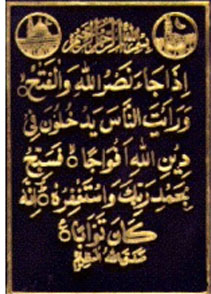
during that last pilgrimage that the surah entitled “Succor
” was revealed, which he received as an announcement of
approaching death. Soon after his return to Al-Madinah he fell ill. The
tidings of his illness caused dismay throughout
When,
later in the day, the rumor grew that he was dead. Omar threatened those
who spread the rumor with dire punishment, declaring it a crime to think
that the Messenger of God could die. He was storming at the people in
that strain when Abu Bakr came into the mosque and overheard him. Abu
Bakr went to the chamber of his daughter Ayeshah, where the Prophet lay.
Having ascertained the fact, and kissed the dead-man’s forehead, he
went back into the mosque. The people were still listening to Omar, who
was saying that the rumor was a wicked lie, that the Prophet who was all
in all to them could not be dead. Abu Bakr went up to Omar and tried to
stop him by a whispered word. Then, finding he would pay no heed, Abu
Bakr called to the people, who, recognizing his voice, left Omar and
came crowding round him. He first gave praise to Allah, and then said:
“O people! Lo! As for him who worshipped Muhammad, Muhammad is dead.
But as for him who worships Allah, Allah is Alive and dieth not.” He
then recited the verse of the Qur’an: (And
Muhammad is but a messenger, messengers the like of whom have passed
away before him. Will it be that, when he dieth or is slain, ye will
turn back on your heels? He who turneth back doth no hurt to Allah, and
Allah will reward the thankful.)
“And,”
says the narrator: an eye-witness, “it was as if the people had not
known that such a verse had been revealed till Abu Bakr recited it.”
And another witness tells how Omar used to say: “Directly I heard Abu
Bakr recite that verse my feet were cut from beneath me and I fell to
the ground, for I knew that Allah’s messenger was dead, May Allah
bless and keep him!” All the
surahs of the Qur’an had been recorded in writing before the
Prophet’s death, and many Muslims had committed the whole Qur’an to
memory. But the written surahs were dispersed among the people; and
when, in a battle which took place during the Caliphate of Abu Bakr –
that is to say, within two years of the Prophet’s death – a large
number of those who knew the whole Qur’an by heart were killed, a
collection of the whole Qur’an was made and put in writing. In the
Caliphate of Othman, all existing copies of surahs were called in, and
an authoritative version, based on Abu Bakr’s collection and the
testimony of those who had the whole Qur’an by heart, was compiled
exactly in the present form and order, which is regarded as traditional
and as the arrangement of the Prophet himself, the Caliph Othman and his
helpers being Comrades of the Prophet and the most devout students of
the Revelation. The Qur’an has thus been very carefully preserved. *Taken, with some editorial changes, from Pickthall’s introduction to his translation of the Qur’an. |